

This year, we were eager to make a tour through some of the famous locations on Indonesia’s “main island” of Java (Jawa, ꦗꦮ, ᮏᮝ).
From 1 Mya…
The vast island of Java, all of volcanic origin, consists of at least 45 active volcanoes, most slumbering regally above innumerable valleys and plains that host over 150 million Indonesians (more than all of Japan).
Our genus and species has called Java home for over one million years, with a continuous progression of learned, literate, and artful human civilizations.


ajustinfocus.com
The heritage of Jawa consists of many peoples and languages. Much of Jawa traditionally used the Hanacaraka (ꦲꦏ꧀ꦱꦫꦗꦮ) script, and still does in some cities.
Waterfalls
Our Javan trip began with a waterfall (air terjun) adventure.
On the way south from Surabaya, we trekked up to the head of a lush steep valley, which narrows to a high-walled gorge and ends in a 200-metre waterfall (air terjun Madakaripura).
We donned lite helmets, as a recognition (if not cure) for apparently frequent rockfall. Perhaps the guardian of the gorge would keep us safe…


ajustinfocus.com
Fresh weather in prior days blessed us with clean wild showers from walls overhead.
ajustinfocus.com ajustinfocus.com ajustinfocus.com


Local sellers, ubiquitous throughout Indonesia, here offered hot drinks and local honey.
ajustinfocus.com

Mount Bromo (Gunung Bromo, ꦧꦿꦩ)
The crowning attraction in Java Timur (east) is Bromo, the currently active sub-crater inside the vast Tengger Caldera.
Hundreds (perhaps thousands?) of extremely well-kept vintage Toyota Land Cruiser jeeps are enlisted by local driver-guides, to shuttle visitors to viewpoints and into the caldera in all conditions.
ajustinfocus.com

We woke much too early (4am) and quickly hiked up to a famous viewpoint on the rim of the great caldera, prepared to catch the sunrise in weather far superior to our expectations–apart from the brisk temperatures above 2000 metres elevation.
ajustinfocus.com

We continued down into the caldera by jeep for the hike up to Bromo’s active crater, and more scenery/photo opportunities.
ajustinfocus.com ajustinfocus.com ajustinfocus.com ajustinfocus.com


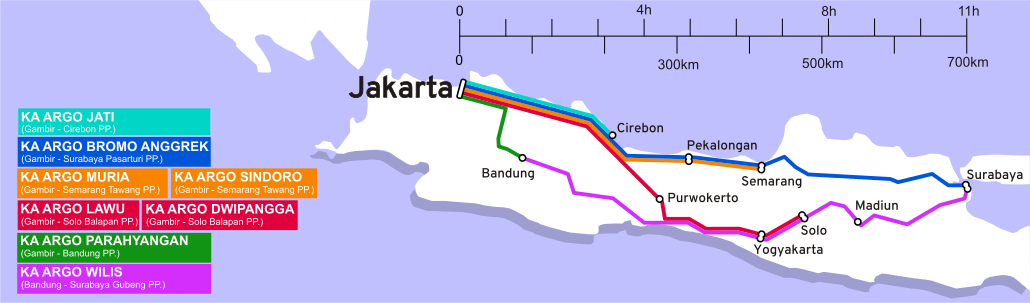
Java by Rail


ajustinfocus.com
Yogyakarta (ꦔꦪꦺꦴꦒꦾꦏꦂꦠ)
Shortly we arrived to Yogyakarta, considered by many both inside and outside of Indonesia to be a leading cultural centre for traditional arts, religion, thought, and education.
We were happy to find a nice blend of modern amenities and historical wonders, with ornate palace grounds and kampung batik (handmade batik-making warehouses and shoppes).


ajustinfocus.com
ajustinfocus.com ajustinfocus.com ajustinfocus.com


Museum Sonobudoyo
ajustinfocus.com ajustinfocus.com ajustinfocus.com ajustinfocus.com ajustinfocus.com ajustinfocus.com ajustinfocus.com ajustinfocus.com ajustinfocus.com ajustinfocus.com ajustinfocus.com ajustinfocus.com


Prambanan (ꦫꦫꦗꦺꦴꦁꦒꦿꦁ)
Hindu kingdoms (like Majapahit) dominated much of Indonesia before the 16th century, and the cultural heritage persists in many areas. The Prambanan temple was built in 850CE.
ajustinfocus.com ajustinfocus.com ajustinfocus.com


The Keraton (Palace)
Within thick old classic walls of the old city, the Keraton palace is a major attraction with numerous royal courtyards, museum displays, and live traditional wayang dances with gamelan.
ajustinfocus.com ajustinfocus.com ajustinfocus.com


Taman Sari (The Royal Baths)
A old royal bath complex (Taman Sari) now open for visiting (but not bathing) provides a pleasant walking experience thru quiet motor-free alleyways from a different time.
ajustinfocus.com ajustinfocus.com


Jogja National Museum
ajustinfocus.com ajustinfocus.com ajustinfocus.com


More glimpses from ‘Jogja’
ajustinfocus.com ajustinfocus.com ajustinfocus.com ajustinfocus.com


Borobudur (ꦕꦤ꧀ꦝꦶꦧꦫꦧꦸꦝꦸꦂ)
The buddhist Borobudur temple was apparently abandoned after the 1st millennium (CE), until colonial interest in the early 1800s led to its restoration.
It is now a highly visited circuit involving giant stone stairways and abundant photo-ops. It is believed to have held high cosmological significance to its creators, and potential harmonies with the astrological heavens.
ajustinfocus.com ajustinfocus.com


Solo
Solo (aka Surakarta) was for us a milder experience than Yogyakarta, with a bit more relaxed feel, and high quality cuisine and textiles.
ajustinfocus.com

Pura Mangkunegaran
The Pura Mangkunegaran is a regal complex exhibiting beautifully maintained colonial features, a well-maintained inner garden, and sublime dance rehearsals.
ajustinfocus.com ajustinfocus.com ajustinfocus.com ajustinfocus.com


Triwindu Antik Market
Solo’s Triwindu antique (antik) market was the most impressive of its kind on our trip, with two levels of stalls, abundant stock, and relaxed operators. The experience and inventory here was superior to that found in Jakarta’s Jalan Surabaya.
ajustinfocus.com

Street art, local cuisine
ajustinfocus.com ajustinfocus.com ajustinfocus.com


Batik
The traditional batik fabric design and dyeing process is a central part of Javanese culture, holding longstanding regional and royal significance.
Yogyakarta and Solo (Surakarta) are leaders in batik. Here we were able to visit many fine shoppes, as well as an open workshop that invites guests to conveniently create their very own batik pieces.
Hot wax is used to mask intricate patterns and illustrations into fabric, which is then dyed using natural or modern dyes to progressively apply colors to unmasked areas. The wax is boiled away upon each progressive dyeing cycle.
ajustinfocus.com ajustinfocus.com ajustinfocus.com


ajustinfocus.com ajustinfocus.com ajustinfocus.com ajustinfocus.com ajustinfocus.com


‘Kampung batik’ refers to areas of these cities that host pleasant walking and authentic local textile shops, featuring elaborately patterned handmade wax-dyed fabrics (batik).
Old traditional wooden houses can still be found here as well, with some of them open for visitation, and others converted into quiet cafes.


ajustinfocus.com
Semarang (Kota Tua)
Once again by smooth train lines, we arrived from Solo to Semarang, a coastal city thriving as a trading centre.
An old ‘kota tua’ in the process of restoration into a tourism centre entertained us with some fine new restaurants.
ajustinfocus.com ajustinfocus.com ajustinfocus.com ajustinfocus.com


Kampung Batik (Semarang)
A small neighborhood here near the Kota Tua smartly transformed itself into a tourist-friendly textile attraction, with pleasantly quiet and gardened alleyways.
ajustinfocus.com ajustinfocus.com


Gedong Songo
We were graciously invited on a drive up into the highlands above Semarang to visit a set of Hindu temples (candi) cascading down the mountainside from a natural steam vent and hot springs.
ajustinfocus.com ajustinfocus.com


Karimunjawa
From Semarang we drove to the port city of Jepara, famous for its history of great tropical hardwood forests and woodcrafts, boats, furniture, and sea salt.
The abundance of stout old wooden fishing boats lining the banks of rivers and harbors caught my attention.
Some local boys quoted me 10 million rupiah (~USD$500) for one of these kapal, though I doubt they had the ’title.’
ajustinfocus.com

The express ferry to Kepulauan Karimunjawa (Karimun Jawa Islands) was admirably sized and outfiffed, and blasted its way through ~80km of wind chop in just under three hours.
Many of the 200+ passengers fought sea sickness, unaccustomed to the rolling motions.
ajustinfocus.com

The island is a classic getaway from Java, offering a relaxed atmosphere, island-hopping by day, and snorkeling experiences.
ajustinfocus.com ajustinfocus.com


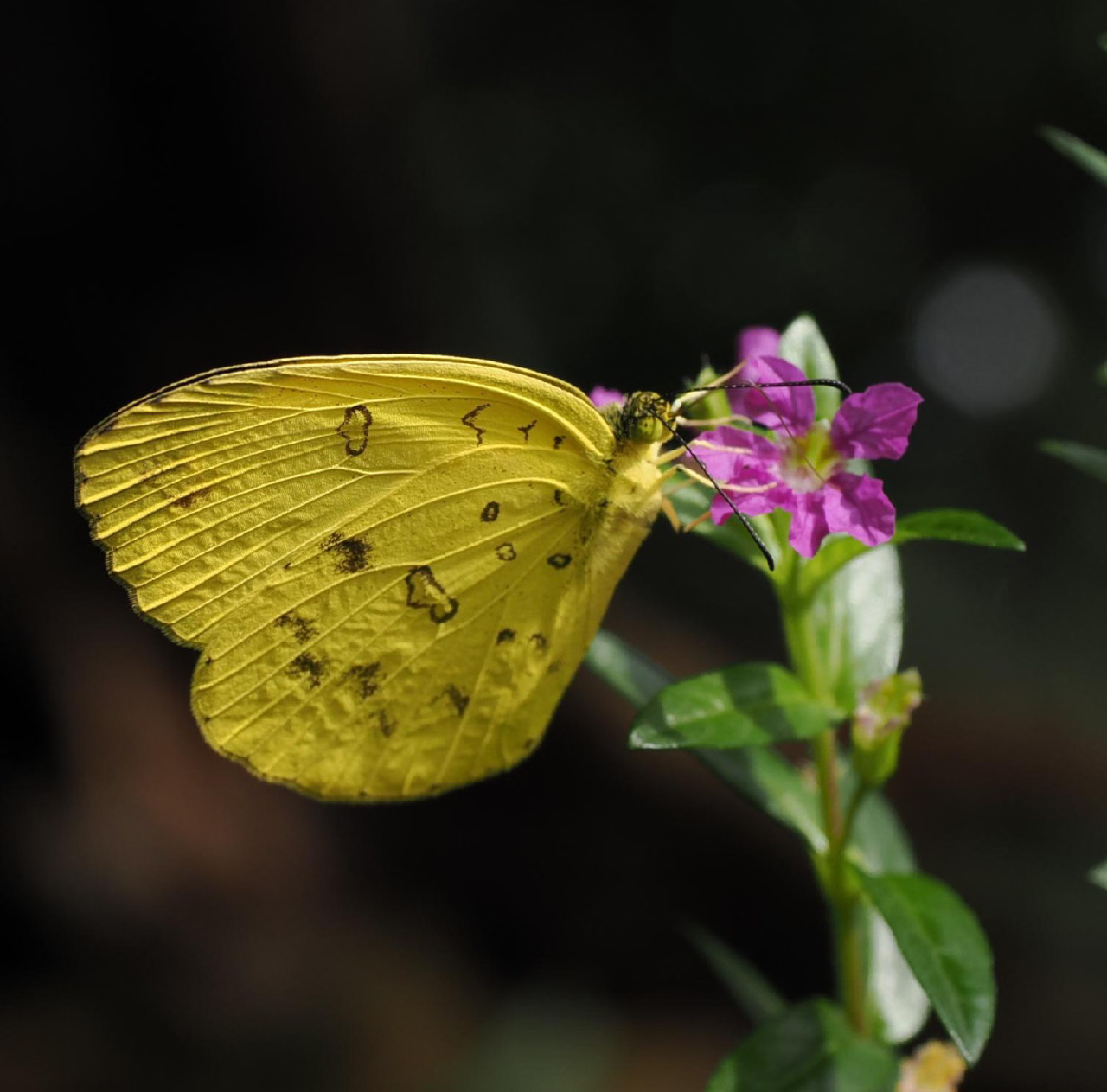
I was pleased to see some interesting wildlife hiding out in this lesser populated environment.
ajustinfocus.com ajustinfocus.com ajustinfocus.com ajustinfocus.com


Bandung
We took Indonesia’s first high-speed train line, the ‘Whoosh’, to Bandung in ~45 minutes, much faster and more smoothly (and perhaps more safely, for now?) than the 2-3 hour drive on modern tollways.
Bandung is situated in an inland mountain valley, was an important colonial centre for the Dutch, and is now a stylish and well-treed ‘college town,’ especially in its northern half.
We were fortunate to stay two nights with cousins in their cozy forest-side home high above the city, nearby to famous mountaintop attractions.
ajustinfocus.com ajustinfocus.com ajustinfocus.com


Jakarta
Jakarta is a vast old city of 30 million+ inhabitants sprawling over 66,000+ hectares of lowland marine delta and plains, that has been the centre of many important things through the long history of Java.
Now serving as the commercial nexus and government capitol, Jakarta is perpetually busy, with urban planning and transportation challenges rivaling or surpassing that of many other national centres.
Nonetheless true to central Indonesian style, elegance can be found wherever one with finer senses gains control over precious private space.
ajustinfocus.com ajustinfocus.com ajustinfocus.com ajustinfocus.com


Merdeka
August 17th is Indonesia’s national independence day, known as Hari Ulang Tahun Kemerdekaan Republik Indonesia (aka HUTRI.)
We found a neighborhood fair with musical performances, and the family hosted music and friends.